Innovation Hub · Pre-scoped pilot
Umay Care Holdings Inc.
Confidential · v1 · April 2026

You have musculoskeletal recovery covered. We are the pilot for the ocular-autonomic load your stack doesn't yet measure.

In plain English: eye-strain and nervous-system recovery, measured under load.
A 10-minute thermal recovery protocol that members already use daily in roughly 3,000 homes — clinician-recommended, member-paced, with prescribed-therapy-grade adherence in the most recent activation cohort (0.71 DAU/MAU, 94% 90-day active past the cliff most wearables fall off). N=500 ISC pilot: 75% CVSS-17 screen-strain improvement (p<0.0001); the same evidence stack also moved OSDI, PSQI, and STAI. Real recovery behavior now. The pilot is structured to validate whether that behavior transfers into Life Time's member context, while RestScan validation runs in parallel toward closing the loop.
Scope
1–3 flagship clubs
Duration
8–12 weeks
Clinical lead
Dr. Sharmin Habib, OD
Failure terms
Umay absorbs cost on miss
The category gap

Everyone Measures.
Nobody Manages.

Tracking without intervention is surveillance of decline. A measurement layer is necessary; on its own, it is not sufficient.
What trackers do

Measure. Surface. Suggest.

Sleep score, HRV, strain, readiness on a dashboard. "Sleep more." "Reduce stress."

Category benchmark: 25% wearable-industry average retention, with Oura as the high-retention exception at 88%.
What's missing

An active intervention — not a number that narrates.

Outside gym hours — in the post-work, pre-sleep window where the load actually accumulates.

With clinical evidence — not anecdote, not NPS, not "engagement."

Necessary, but not sufficient.
The category gap
0

products meet the pilot discriminator.

Discriminator: biometric measurement + active periocular recovery protocol + deployable in member context.

Oura measures. Whoop measures. Calm suggests. Headspace suggests. None pairs the measurement with this recovery action.
Umay is the credible next step into this gap: a recovery intervention already used daily at the member level, with the measurement layer that closes the loop built into the pilot to validate. The category extension is in closing the loop — and Life Time can help close it.
See the loop
Umay closed-loop instrument
Pre-scoped pilot

What we're proposing,
before you ask.

Written like a contract appendix, not a sales sheet. Small by design, milestone-led, falsifiable.

The pilot, on one plate.

Print this spec
Scope
1–3 flagship clubs. Selected jointly with Life Time wellness leadership. Intentionally narrow so the pilot answers a clean question instead of producing diffuse activity.
Duration
8–12 weeks. Long enough to capture repeat behavior and pre/post deltas; short enough that the next decision lands inside one operating quarter.
Member cohort
40–120 members per club, recruited via existing wellness touchpoints. Eligibility limited to members with screen-intensive work or self-reported visual fatigue, operationalized via the Umay ECIQ self-assessment (eyecomfort.org) — eye discomfort, sleep quality, and stress on a 0–100 scale.Pilot-design range; final N set jointly with Life Time before pre-registration.
Intervention
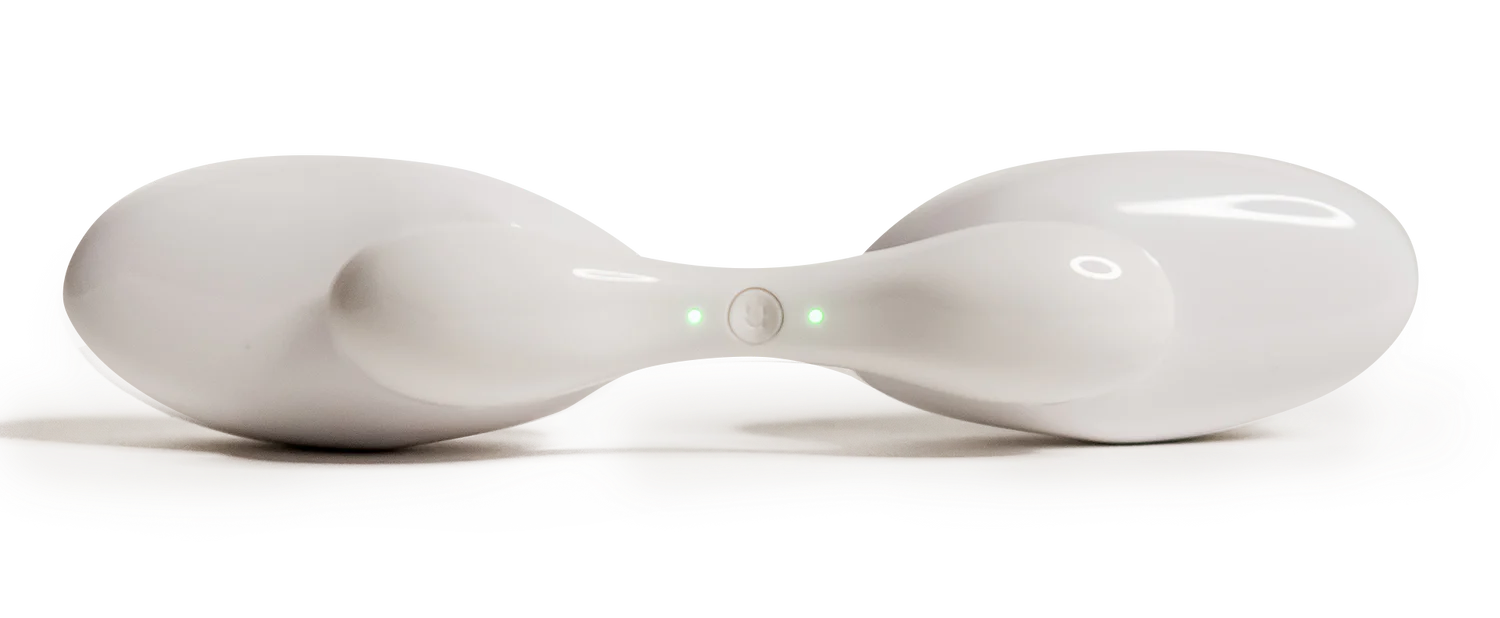
Umay closed-loop ocular recovery protocol. 10-minute periocular thermal session, member-paced, used at home or in-club lounge. No app required for the protocol itself.
Measurement
Pre/post measurement via RestScan (browser-based, computed locally). Validated instruments at baseline and pilot completion: CVSS-17, OSDI, PSQI, STAI. Adherence captured passively.
Success criteria
CVSS-17 ≥ 15% improvement · visit-frequency ≥ 10% lift for the cohort vs. matched non-cohort baseline · adherence ≥ 60% over the pilot window. Threshold source: proposed Life Time pilot spec. CVSS-17 is the primary endpoint; visit-frequency uses a matched non-cohort baseline; adherence is a minimum-use threshold.
Baseline defense
Primary endpoint: member-level baseline-to-completion CVSS-17 delta. Operational endpoint: visit-frequency compared with a matched non-cohort baseline. This separates clinical movement from selection effects and keeps the pilot auditable.
Failure terms
Umay absorbs the pilot fee on miss. If the cohort fails to clear the pre-registered thresholds, Life Time is not invoiced for onboarding, clinical support, or the success premium. Pilot units are billed at clinic-channel cost regardless of outcome — Umay's compensation is locked to results.
Clinical lead
Dr. Sharmin Habib, OD. Clinician lead on the N=500 ISC pilot, which showed significant improvement across screen strain, sleep, and stress outcomes; gates every clinical claim and the measurement protocol.
Data residency
Local-compute. No biometric egress. Aggregate, de-identified outcomes only. Architecture inset below.
Operational fit
Standalone tool. No IT integration, no MDM, no SSO, no member-data review. Ships direct to member home or staged at concierge for in-club distribution.
Compute · vs · Publish — Data architecture
CaptureAll signals, locally
Quality gatePer-domain confidence
PublishOnly validated metrics
AggregateDe-identified outcomes
No biometric data leaves the member's session. The structure is mapped against FDA special controls for camera-based vital sign monitoring (cf. Oxehealth De Novo DEN200019). It prevents overclaiming at the product level while keeping the measurement honest.
Engagement evidence

Outcomes in instruments.
Adherence in behavior.

What members actually do, not what they say. Umay is already a daily behavior at the member level — outcomes that move on validated clinical instruments, adherence that holds at prescribed-therapy-grade levels, repeat use that survives the 90-day cliff most wearables fall off. This is the strongest current signal the pilot inherits. The recovery already works in real homes; what the pilot validates is the measurement layer that turns that behavior into infrastructure.
The industry doesn't lack treatments. It lacks adherence.
74%
Eye-comfort improvement
OSDI · N=500 · p<0.0001
67%
Sleep-quality improvement
PSQI · N=500 · p<0.0001
84%
Pilot adherence
Daily use · N=500 · 6 weeks
0.71
DAU/MAU, deployed cohort
2025 activation · 94% 90-day active
Real-world adherence in the most recent activation cohort. Approaching prescribed-therapy levels — CPAP benchmark is 0.60–0.80, the gold standard for prescribed-therapy compliance. 69% of sessions occur in the 7–11 PM window: the post-work, pre-sleep hour. Under 1% return rate across ~3,000 deployed units.
Population transfer. The N=500 cohort was federal employees inside an ISC pilot; the deployed commercial channel shows repeat behavior across ~3,000 units and 107 clinical partners. The source files do not yet quantify Life Time-like subgroup heterogeneity, so the pilot treats population transfer as a validation question rather than assuming it away. The mechanism remains grounded in thermal threshold, autonomic shift, and blink-rhythm restoration — not in heuristics trained on one population.
One intervention. Four validated instruments.
All p<0.0001 · N=500 ISC pilot
OSDI
Eye comfort
74%
d = 0.69
CVSS-17
Screen strain
75%
d = 0.72
PSQI
Sleep
67%
d = 0.54 · +66 min/night
STAI
Stress / nervous system
65%
d = 0.54
Why one protocol moves four Life Time-relevant instruments

Screen engagement suppresses blink rate by roughly 68% (Vision Council 2022; Sánchez-Valdeón 2025). The blink is two things at once: an ocular-surface refresh and a cognitive micro-pause. Restoring its rhythm reduces load across both systems, which is why the same intervention surfaces in eye-comfort, screen-strain, sleep, and stress instruments rather than only one.

The higher the baseline load,
the larger the observed improvement.
Severity gradient · dose-response
Mild
−32%
Moderate
−35%
Severe
−43%
Severe-cohort effect size: d = 1.17 · p < 0.0001 · n = 166. Monotonic across severity strata, consistent with a mechanism acting on underlying physiology rather than reported satisfaction alone.
For Life Time specifically: high-stress, screen-saturated members are the group where a measurable recovery protocol has the most room to show whether it matters.
27% of the poor-sleep subgroup crossed the clinical threshold entirely; 19% of severe-OSDI patients reclassified to normal. One optometry director described the result as broader than an ocular-comfort tool.
3-year durability in the founding clinical cohort. 27 of the original 50 clinics from 2022 still order in 2025, averaging 5.6 reorders each. The recovery behavior holds at the channel level over years, not just inside the 6-week pilot window.
Closed-loop precedent. Medtronic CGM + insulin pump (80%+ recurring revenue). Oura ring (88% retention vs. 25% wearable-industry average). ForeseeHome AMD home monitoring (62 → 94% adherence after the measurement loop closed). Universal pattern: 1.5–3.5× retention improvement when the measurement loop closes. For Life Time, this is the same shape — instrumented recovery converts into member retention.
What this evidence proves
  • One intervention moves four validated instruments — not four interventions stacked.
  • Adherence holds at near-prescribed-therapy levels in the deployed cohort, post-pilot.
  • Repeat behavior concentrates in the post-work, pre-sleep window.
  • Effect is largest where the load is largest — consistent with mechanism, not regression to the mean.
  • Already running inside a clinically-supervised channel: ~3,000 deployed units across 107 optometry partners.
What the pilot still validates
  • Whether Life Time members behave like the deployed cohort in adherence and timing.
  • Whether instrumented ocular recovery lifts visit frequency at the cohort level.
  • Whether the closed-loop protocol fits inside Life Time's operational rhythm without friction.
  • Whether wellness-leadership reads the result as a category extension, not an SKU.
The closed loop

Already a daily behavior.
Closed loop, in pilot.

The thermal recovery protocol is already a daily habit at the member level — clinician-recommended, member-repeated, used past the cliff most wearables fall off. This pilot is structured to test whether that behavior transfers into Life Time's member context — the bridge the future measurement layer is designed to instrument once validated.
● The architecture, in pilot

The intervention is already a daily behavior.
RestScan is the measurement layer the pilot is built to test.

RestScan → Baseline → Rest Session → Rescan → Delta. The recovery protocol is already a daily behavior in real homes; the measurement layer that closes the loop is what this pilot is designed to pressure-test. Strip the protocol from Umay and the proposition collapses — the recovery is what already works.
Origin · 14 years of clinical refinement

From the chair, not the lab.

2010 · Routine eye exam reveals an unaddressed pattern in screen-saturated patients. Designed by Dr. Sharmin Habib, OD (clinician, PI on the N=500 ISC pilot) and Ali Habib (engineer, CEO).

~3,000 deployed units · 107 clinical partners · 165,895 logged sessions · manuscript in preparation.

Test of integrity

Every link is testable. Every link is required.

That is the difference between a measurement product with a recommendation engine bolted on, and a recovery product with a measurement layer that exists to falsify its own claim.

The recovery is what already works. The measurement layer is what the pilot validates.
01
Tissue repair
Thermal recovery restores function at the eyelid surface. Comfort returns within minutes; structural recovery moves on the order of weeks.
Mechanism · Meibomian expression at thermal threshold (~40–42°C contact temperature, sub-erythema). Reference: Sánchez-Valdeón 2025; meibography and TFOS DEWS III protocol.
02
Circulation
Sustained periocular warmth modulates local blood flow behind the retina. The shift is dose-dependent and reverses on cooling.
Mechanism · Choroidal perfusion shift, directional-tier evidence. Gao et al. 2026, PMID 41771265.
03
Parasympathetic activation
The closed-eye, member-paced session shifts the body toward recovery state. Members describe it as a 10-minute reset they didn't have to schedule.
Mechanism · Parasympathetic activation, measurable via remote photoplethysmography (rPPG). Habib et al. 2025; FDA General Wellness optical-sensing guidance, Jan 2026.
The measurement logic, demonstrated

What we're building toward.

A 90-second walkthrough of the measurement logic this pilot is structured to validate. Self-paced, computed locally, no install. The live measurement build follows pilot deployment.
Implementation logic, in beta. The pilot is what makes it real.
Runtime · ~90 seconds Stage · Functional beta Validation · N=50 underway
Run 01 / 03 · Trusted output
A confident scan

Strong signal,
standard review.

Every blink is measured for completeness. The polygon peaks right of the threshold — three domains checked, three domains confirmed.

2-minute protocol · standard webcam
Blink Quality
Eye Closure
Heart Rate
Clean run.
All domains met quality thresholds. The system chose to publish.
Blink depth distribution
Threshold
OpenClosed
Blink rate 22 bpm Quality OK
Incomplete blinks 8.3% Typical
Heart rate 72 bpm Signal OK
Run 02 / 03 · Honest refusal
Conditions degraded

Same eyes, different conditions.

A measurement tool that admits uncertainty is more trustworthy than one that always guesses. The system refuses rather than publish a number it can't defend.

2-minute protocol · low light, motion
Blink Quality
Eye Closure
Heart Rate
Results withheld.
Conditions fell below the publish threshold. That refusal is why you can trust the readings the system does publish.
Diagnostic rejection trace
Threshold
Deficit zone
OpenClosed
Primary frequency rejected. LOW_FPS (×46) + excessive IBI cuts. The system flags signal quality below the publish gate and withholds output.
Run 03 / 03 · Pre / Post comparison
A measured delta

Same protocol,
before and after a 10-minute rest.

The whole distribution shifted right. Both runs cleared the gate. The delta is what objective efficacy looks like.

Post-rest scan · same eyes, same protocol
Blink Quality
Eye Closure
Heart Rate
Delta verified.
The warm session changed something measurable in the eyes — and RestScan captured that change with both runs above the publish gate.
Blink depth shift · gray = before, teal = after
Threshold
OpenClosed
Illustrative · simulated metrics (Usable time, Incomplete blinks, PERCLOS) demonstrating the delta-capture pattern, not ISC pilot outcomes.
MetricPrePostΔ
Usable time48.2 s68.0 s+19.8 s
Incomplete blinks24.6%9.8%−14.8 pp
PERCLOS18.2%12.5%−5.7 pp
What you just saw

Three runs. One principle.
The system publishes only what it can defend.

This is the implementation logic — functional beta, validated in parallel as an internal study. The Life Time pilot tests whether it bridges from current member behavior into closed-loop measurement at scale. RestScan publishes confident output when the signal supports it, refuses cleanly when it doesn't, and quantifies change when an intervention shifts state.

What you saw is the architecture, in beta. What the pilot tests is whether the behavior holds in your member context. The two layers converge after the pilot, not before.

RestScan's primary measurement validation runs in parallel as an internal study. The Life Time pilot tests whether the recovery intervention creates the repeat behavior and operating context the closed loop is designed to instrument once both layers are validated. The simulation above shows implementation logic; the pilot stands on the protocol and pre-registered success criteria with or without it.

Why Life Time specifically

The load your stack
doesn't yet measure.

Cold plunge, sauna, percussion, mindfulness — covered. Ocular and autonomic load — not yet.
● Stage 0 · The unawareness gap

Your Brain Stops Feeling Tired. Your Body Doesn't Stop Degrading.

After 3 days of bad sleep, you stop feeling tired. But you don't stop getting worse. Your brain edits out the fatigue. Your body keeps accumulating the damage. By day 14, you're as impaired as someone who hasn't slept in two days — while reporting you feel fine.
Van Dongen et al. 2003, Sleep · analogy only: subjective fatigue can plateau while objective load keeps accumulating; Life Time screen load is measured separately through CVSS-17, OSDI, and timing/adherence.
Objective reality (impairment) Subjective feeling (unaware)
Severe Moderate Baseline 0 2 4 6 8 10 14 Days of sleep restriction (4 hrs/night) PLATEAU THE UNAWARENESS GAP
Schematic adapted from Van Dongen 2003 cognitive-lapse trajectories. The bridge is structural, not literal: self-report can under-detect accumulating load, which is why the Life Time pilot pairs subjective instruments with pre/post measurement, repeat use, and timing data.
This is the operating window. Members leave training and re-enter the same screen-heavy evening that produced the load. Ocular comfort and nervous-system state still matter after the class ends. The Umay protocol fits in that window — 10 minutes, member-paced, no facility footprint required.
Member context · silent loop · optional viewing
The load your stack doesn't yet measure happens in the hours your facilities can't reach.
Why now, why Life Time

Screen-fatigue is a major load still missing an instrumented recovery layer.

Cold plunge, sauna, and percussion address musculoskeletal recovery. Mindfulness and breathwork address cognitive load. LifeSpa addresses skin and lymphatic. Screen exposure sits across those categories: eyes, sleep, stress, and the off-ramp from work into recovery.

Mechanism, not heuristic

Mechanism robustness across phenotype variance. Our protocol is grounded in fundamental thermal and autonomic mechanisms — meibomian expression at thermal threshold, choroidal perfusion shift, parasympathetic activation — rather than population-trained heuristics. Subgroup behavior across a Life Time-like membership is exactly what the pilot is scoped to validate. That is why this is a flagship pilot, not a rollout.

Bedtime timing

Peak use is post-work, pre-sleep — 69% of sessions in the 7–11 PM window. Members are already running this protocol at home in the hours your facilities can't reach. The pilot is what turns that behavioral signal into operational visibility for Life Time.

Three operational windows.
Member uses any one independently.
Deployed cohort · self-reported timing
Pre-training
Rise · 1.5 min, cool
Clarity and lighter eyes before an evening class.
Between sessions
Recharge · 5 min, cool-warm
Recovery during a long screen day; mid-day reset.
Post-evening → pre-sleep
Rest · 9 min, warm
The dominant 7–11 PM window. Off-screen, off-ramp.
Members converge on the post-evening window over the first 30 days. The earlier windows are optional, member-paced, and don't require facility access — which means the protocol fits before, between, and after Life Time programming, not only inside it.
Cold plunge, sauna, percussion, mindfulness — covered. Ocular and autonomic load — not yet.
A pilot at one to three flagship clubs is the smallest credible step toward closing that gap, with a falsifiable result inside one operating quarter.